

King Tutankhamun
The Enigmatic Pharaoh Behind the Golden Splendor
On November 4, 1922, Howard Carter and his Egyptian team discovered Tutankhamun’s intact tomb in the Valley of the Kings, a rare find untouched by thieves or floods.
The young pharaoh, who ruled from 1332–1323 BCE and died at about 18 or 19, was buried with an extraordinary collection of treasures — including his 22-pound gold funerary mask, meteoric iron dagger, six chariots, and nested coffins totaling 1.25 tons. These artifacts provide an exceptional glimpse into the wealth, artistry, and spiritual beliefs of ancient Egypt’s Eighteenth Dynasty.
The Enigmatic Pharaoh Behind the Golden Splendor
The sovereign whose burial treasures would captivate the world emerged from one of ancient Egypt's most turbulent dynasties. Born circa 1342 BCE during the height of the Eighteenth Dynasty's religious upheaval, the future pharaoh received the birth name Tutankhaten—"living image of Aten"—a designation that would prove prophetic of the theological conflicts defining his brief yet transformative reign.
Royal Lineage and Formative Years
Tutankhamun is widely believed to be the son of Pharaoh Akhenaten, whose monotheistic revolution upended Egypt’s long-held religious traditions. His mother’s identity remains debated — possibly Queen Nefertiti, Kiya, or even one of Akhenaten’s sisters, reflecting the dynasty’s complex royal marriages.
Raised in Amarna, the city dedicated to Aten, Tutankhamun grew up amid his father’s radical reforms. DNA and medical studies of his mummy reveal the effects of royal inbreeding, including a cleft palate, spinal deformity, and clubfoot. Despite these ailments, he lived a privileged royal life, enjoying a rich diet of meat, vegetables, and fruits, far beyond the simple fare of ordinary Egyptians.
Ascension to Power Under Regency
After Akhenaten’s death around 1336 BCE, Egypt faced a period of instability marked by short-lived rulers until Tutankhamun ascended the throne at about nine years old. To legitimize his rule, he married his half-sister Ankhesenpaaten (later Ankhesenamun), the daughter of Akhenaten and Nefertiti.
As a young king, Tutankhamun’s reign was guided by two powerful advisors — Vizier Ay, a seasoned political strategist, and General Horemheb, the loyal military commander. These influential figures effectively governed Egypt on his behalf, steering the kingdom back toward stability and traditional values.
Counter-Reformation and Restoration of Orthodox Beliefs
Tutankhamun's most significant achievement was the reversal of his father Akhenaten's radical monotheistic reforms. He dismantled the Aten-worship infrastructure and restored the traditional Egyptian pantheon, publicly signaling this change by renaming himself from Tutankhaten to Tutankhamun (replacing the god Aten with Amun).
This theological counter-revolution was cemented by administrative reforms, including moving the capital from Amarna to Thebes, reinstituting the powerful priestly class, and funding the restoration of temples and divine statues, ultimately stabilizing Egyptian society and ensuring the long-term triumph of its ancient religious beliefs.
The Material Testament of Royal Existence
The Material Testament of Royal Existence
The funerary assemblage accompanying Tutankhamun into eternity constitutes an unparalleled archaeological record of pharaonic life during the Eighteenth Dynasty. Each carefully chosen artifact functions as historical testimony, revealing intimate details about the young sovereign's identity, relationships, and quotidian experiences through material culture analysis.
1. The golden mask and royal identity
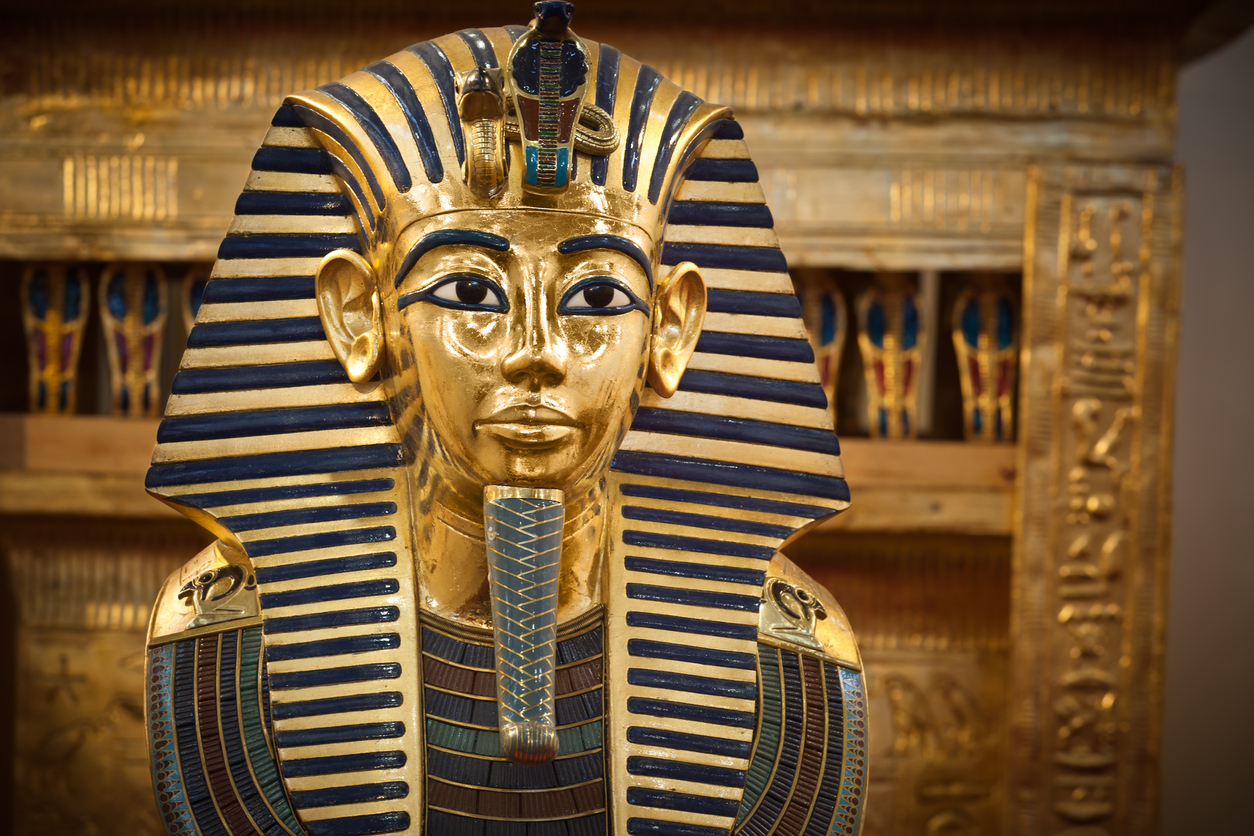
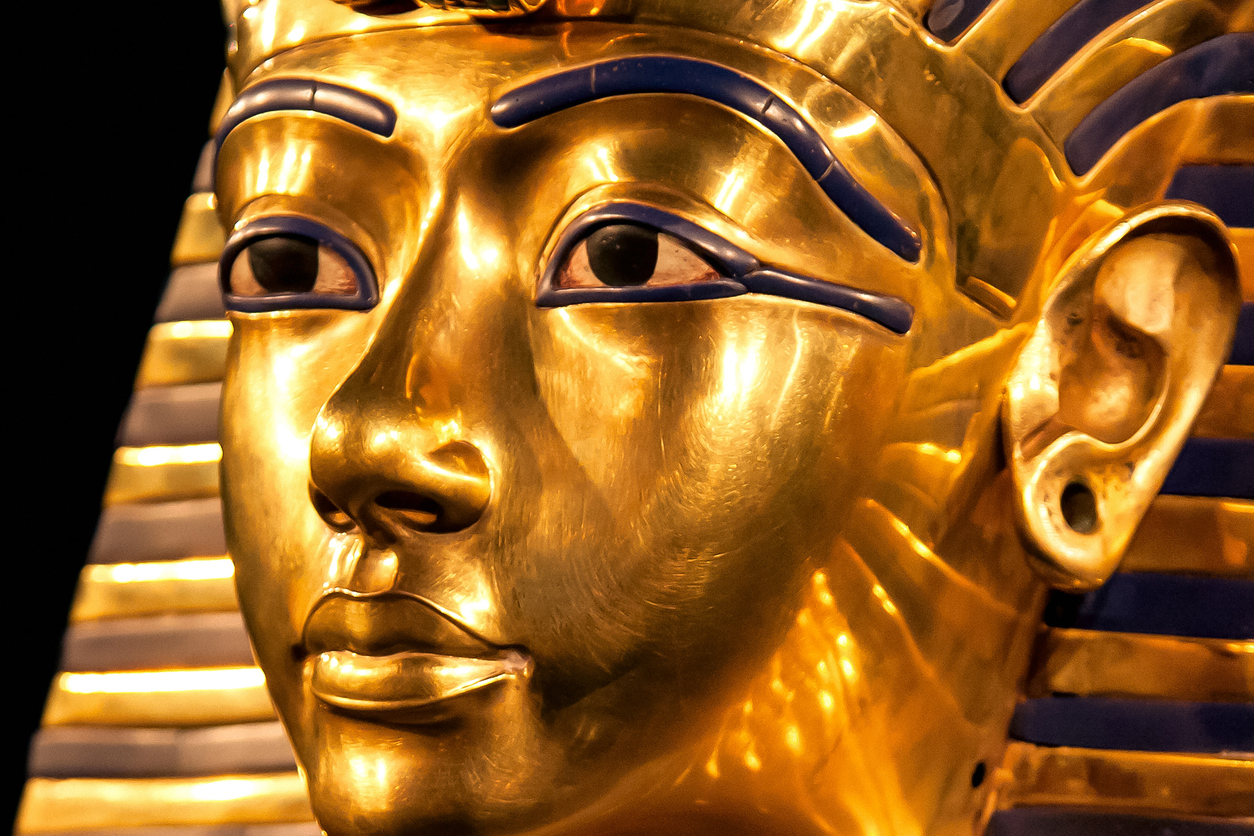
This extraordinary mortuary portrait, weighing precisely 10.23 kilograms, demonstrates the pinnacle of ancient Egyptian metalworking expertise through its dual-alloy construction: 18.4 karat gold comprising the facial features and neck, while 22.5 karat gold forms the remaining elements.
The regalia adorning this masterpiece—the cobra Wadjet of Lower Egypt and vulture Nekhbet of Upper Egypt—proclaims the deceased's dominion over the unified realm.
Particularly significant are the pierced ears, an iconographic detail typically associated with queens and royal children in pharaonic art, providing physical evidence of Tutankhamun's youth at the time of death. The shoulders bear hieroglyphic inscriptions from the Book of the Dead, specifically protective spell 151b, designed to safeguard the deceased's spiritual journey through the Duat.
2. The throne and his relationship with Ankhesenamun
The ceremonial golden throne reveals profound insights into royal matrimonial dynamics through its decorative program. The back panel presents Ankhesenamun in a floral pavilion, extending her hand toward her seated husband in what archaeologists initially interpreted as domestic intimacy.
Contemporary scholarship, however, recognizes these scenes as liturgical performances, with the queen assuming priestly functions within royal religious ceremony.
Complementary iconography appears on a decorative casket lid, where Ankhesenamun presents lotus blossoms and mandrake fruit to her spouse—botanical symbols carrying deep significance related to fertility, regeneration, and eternal love within Egyptian cosmology.
3. The chariots and hunting imagery
Six disassembled ceremonial vehicles provide archaeological evidence of royal martial culture and recreational pursuits. The two most elaborate "state chariots" exhibit gold leaf inlays accompanied by hieroglyphic texts proclaiming royal titulary. One bentwood chassis displays six bound foreign captives while bearing the cartouches of both Tutankhamun and Ankhesenamun, demonstrating their shared authority.
A wooden hunting casket illustrates the pharaoh's prowess in pursuit of gazelles, deer, and ostriches, while its reverse depicts him confronting lions—imagery that serves both as historical record and symbolic representation of royal courage.
4. The garments and mannequin
Archaeological investigation of the Antechamber revealed a life-sized wooden mannequin representing the pharaoh from waist upward. This plaster-covered figure, adorned with white linen tunic and yellow crown, served practical functions within palace wardrobe management.
Surface abrasions indicate the former presence of a jeweled corselet, suggesting sophisticated systems for maintaining royal regalia. Such artifacts illuminate the administrative complexity surrounding pharaonic dress and ornamentation.
5. The board games and leisure items
Four gaming sets discovered within the tomb provide remarkable insights into royal recreation and spiritual practice. The senet boards, crafted from ebony, ivory, and gold, far exceed the wooden examples found in non-royal contexts, reflecting the material luxury available to pharaonic households. One particularly exquisite ivory example, dated to 1333 BCE, includes five red ivory reels, five white ivory pawns, and two ivory knucklebones for gameplay.
Beyond entertainment value, senet held profound religious significance as a metaphor for the soul's navigation through afterlife perils. Victory in this sacred game indicated divine favor from Osiris, Ra, and Thoth—powerful deities governing death, rebirth, and wisdom.
The Sepulchral Assemblage: Sacred Preparations for Eternal Journey
The Sepulchral Assemblage: Sacred Preparations for Eternal Journey
The mortuary equipment within Tutankhamun's burial chamber transcends mere artistic achievement, embodying the sophisticated theological framework that governed ancient Egyptian concepts of death and resurrection.
Each carefully positioned artifact served as both protective talisman and practical implement for the pharaoh's perilous passage through the Duat—the treacherous underworld realm.
1. The nested coffins and burial rituals
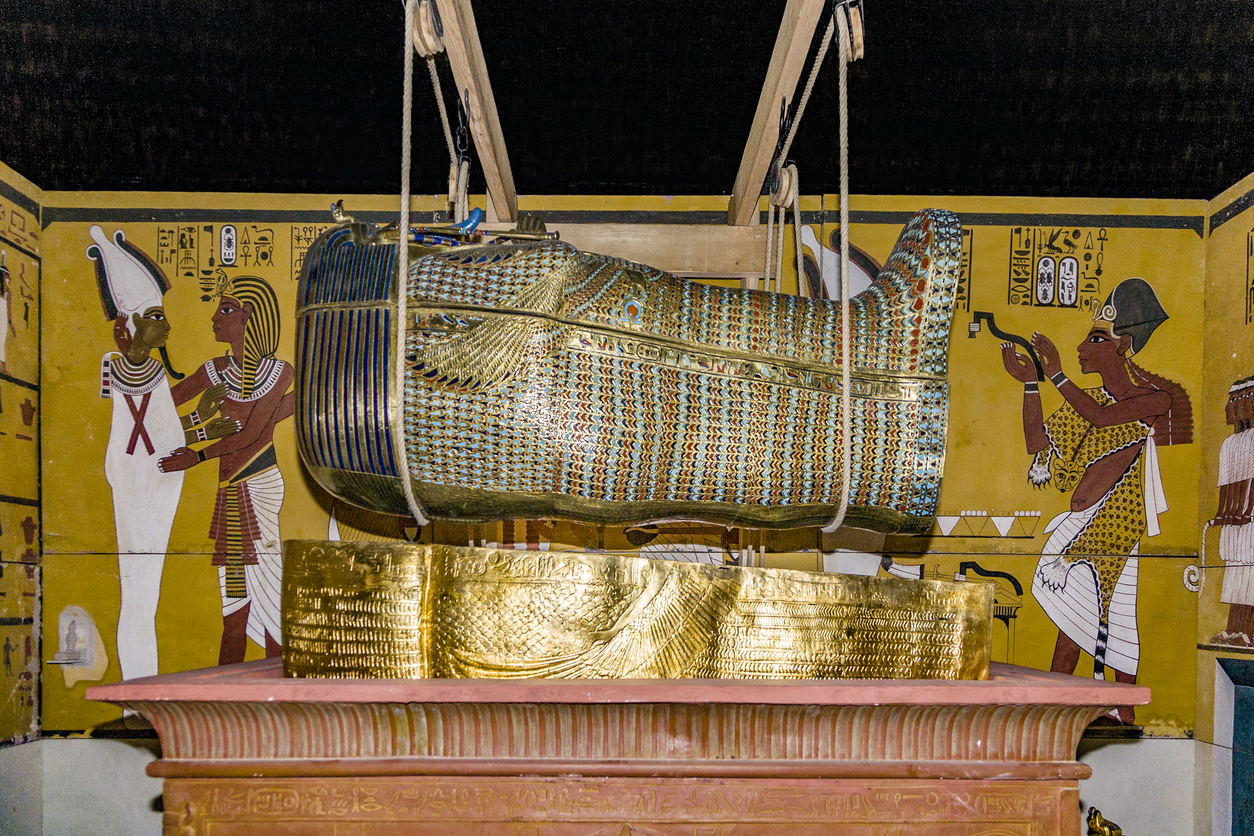
The stone sarcophagus sheltered a remarkable sequence of three anthropoid coffins, each nestled within the other like sacred Russian dolls. The outer pair, constructed from gilded wood, encased an innermost coffin of solid gold weighing precisely 110.4 kilograms.
This extraordinary ensemble achieved a combined mass of approximately 1.25 tons. Carter's meticulous documentation recorded the discovery of copious anointing oils poured over the innermost receptacle—quantities he estimated at "two buckets full". This ritualistic libation represented the pharaoh's metamorphosis into his divine aspect, adorned with the crook and flail emblems that proclaimed his eternal sovereignty.
2. Canopic jars and mummification
The preservation of Tutankhamun's corporeal remains followed ancient protocols refined over millennia. His visceral organs occupied a singular alabaster canopic chest featuring four discrete compartments, each housing a miniature golden coffin containing the king's preserved tissues.
The mummification procedure adhered to the sacred seventy-day cycle: fifteen days allocated for purification rituals, forty days for desiccation through natron salts, and fifteen days for wrapping ceremonies and final adornments. Significantly, the heart—regarded as the seat of consciousness and moral judgment—remained within the thoracic cavity to face Osiris's scales in the afterlife tribunal.
3. Shabtis and afterlife beliefs
The tomb yielded an extraordinary assembly of 413 shabti figurines—a complete workforce comprising 365 laborers (corresponding to each solar day), 36 overseers (one per ten-day week), and 12 monthly supervisors.
These "answerers" would respond to divine summons for agricultural labor in the eternal fields. Crafted from diverse materials including faience, cedar wood, and limestone, they accompanied 1,866 miniature tools essential for afterlife cultivation. Particularly magnificent were specimens carved from translucent calcite bearing cobalt blue hieroglyphic inscriptions, alongside variants displaying the dual crown symbolizing unified Egypt.
4. The mystery of King Tutankhamun's death
Modern forensic analysis continues to debate the precise circumstances surrounding the young pharaoh's demise. Radiographic evidence reveals a fractured left femur exhibiting clear signs of infection, potentially resulting from a chariot mishap during hunting expeditions. This trauma, compounded by concurrent malarial parasitemia, may have precipitated his fatal decline.
Alternative hypotheses propose sickle cell anemia or complications arising from hereditary malformations. Computed tomography scans performed in 2005 definitively refuted earlier assassination theories based on cranial damage, establishing that such injuries occurred during post-mortem preparation procedures.
5. King Tutankhamun's body and mummy today
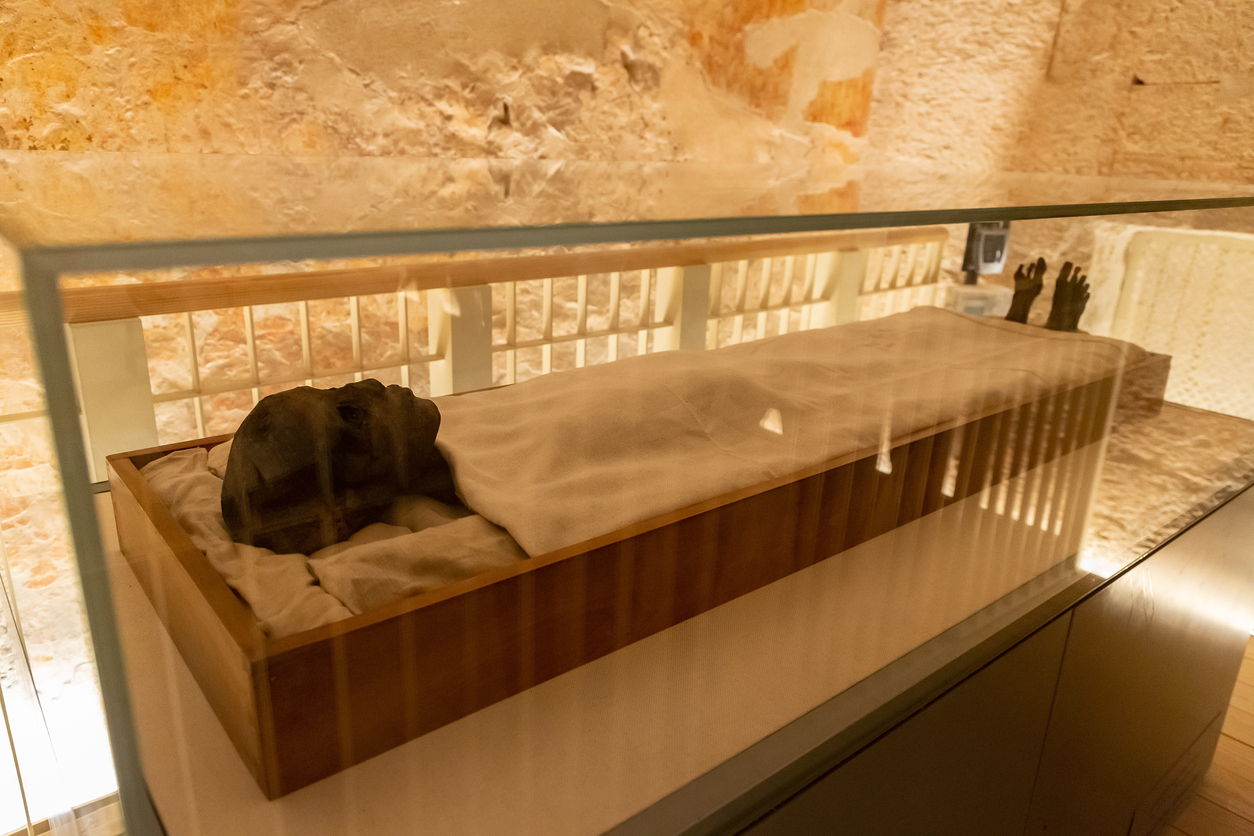
King Tutankhamun’s mummy remains in its original tomb in the Valley of the Kings, though it suffered severe damage during Howard Carter’s 1925 examination. The embalming resins had hardened over millennia, forcing Carter’s team to dismember the body to remove it from its golden coffin.
Alongside the king rested two small coffins containing his stillborn daughters, symbolizing his enduring bond and hope for reunion in the afterlife.
The Enduring Cultural Phenomenon: Tutankhamun's Global Impact
The Enduring Cultural Phenomenon: Tutankhamun's Global Impact
The archaeological revelation of 1922 catalyzed an unprecedented cultural phenomenon that continues to resonate across global consciousness.
The funerary treasures of the boy pharaoh transcended their original religious purpose, evolving into cultural ambassadors that would reshape public understanding of ancient civilizations and archaeological discovery itself.
The Genesis of Modern Archaeological Celebrity
Carter's methodical excavation coincided with the emergence of mass media, creating history's first archaeological celebrity. The discovery ignited what cultural historians term "Tutmania"—a worldwide fascination that transcended academic circles to captivate popular imagination.
Lord Carnarvon's exclusive arrangement with The Times of London inadvertently spawned a mythology of pharaonic curses when competing journalists, denied access to factual reporting, crafted sensationalized narratives following Carnarvon's untimely demise shortly after the tomb's breach.
The Exhibition Phenomenon and Cultural Diplomacy
Carter's systematic documentation of over 5,000 artifacts established the foundation for what would become museum history's most successful traveling exhibition. The inaugural "Treasures of Tutankhamun" tour (1972-1979) attracted an astounding 8 million visitors across seven American cities alone, establishing new paradigms for blockbuster museum exhibitions.
The recent "King Tut: Treasures of the Golden Pharaoh" exhibition (2018-2023) featured 150 carefully selected artifacts in their final international presentation before permanent installation within Egypt's Grand Egyptian Museum.
Heritage Repatriation and Archaeological Ethics
The treasures have crystallized contemporary debates surrounding cultural patrimony and colonial-era archaeological practices. Egypt's intensified efforts to reclaim artifacts removed during earlier expeditions reflect broader global reconsiderations of museum collections and institutional responsibility.
These discussions illuminate the complex intersection of archaeological scholarship, national identity, and cultural sovereignty that characterizes modern heritage discourse.
Contemporary Institutional Housing
The majority of Tutankhamun's funerary collection currently resides within Cairo's Egyptian Museum, though a significant migration to the Grand Egyptian Museum near Giza is underway.
This billion-dollar architectural marvel will mark the first comprehensive reunion of the complete Tutankhamun assemblage since Carter's original excavation, representing Egypt's commitment to showcasing its archaeological heritage within state-of-the-art facilities.
Cultural Penetration and Popular Expression
The pharaoh's influence extends far beyond museum walls, permeating diverse aspects of contemporary culture. Steve Martin's comedic interpretation "King Tut" achieved Billboard success, reaching position 17 in 1978, while Egyptian revival aesthetics profoundly influenced Art Deco design movements.
Contemporary digital innovations, including immersive virtual reality experiences, continue introducing successive generations to the enduring mystique of Egypt's most famous sovereign, ensuring the boy king's cultural relevance persists into the digital age.
FAQs
FAQs
Q1. Can I see Tutankhamun's Tomb?
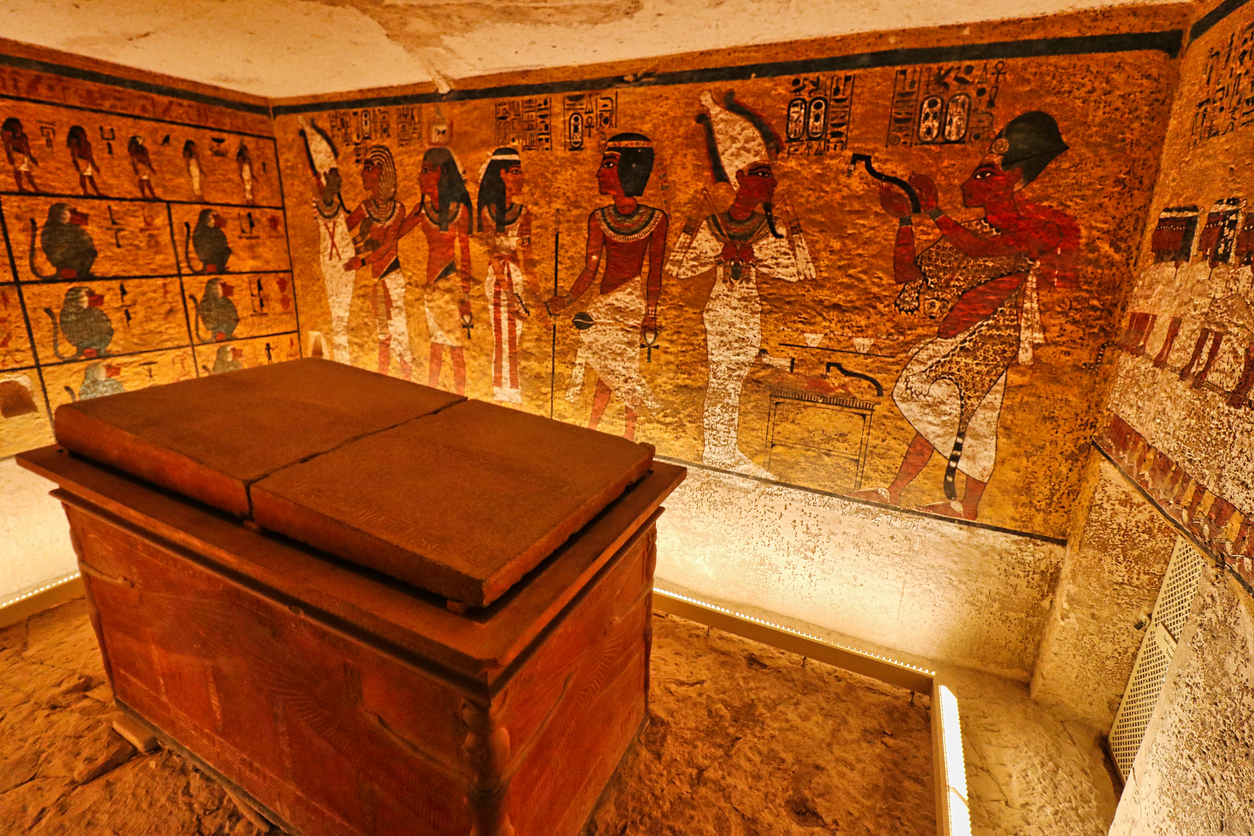
Yes, you can, the tomb, officially designated KV62, is located in the Valley of the Kings on the West Bank of Luxor, Egypt. Entry to Tutankhamun's tomb requires a separate, extra ticket beyond the general admission ticket for the Valley of the Kings. The tomb is notable for its small size and the fact that its famous wall paintings are largely confined to the burial chamber.
Q2. Can I see Tutankhamun's Body / Where is Tutankhamun's Mummy?
Yes, you can, King Tutankhamun's actual mummy and one of his outer sarcophagi are still kept in their original resting place inside his tomb (KV62) in the Valley of the Kings, Luxor. The mummy is preserved and displayed within a climate-controlled glass case inside the tomb's burial chamber. This is the only royal mummy still on display in its original tomb in the Valley of the Kings.
Q3. Which Museum Has Tutankhamun's Treasures?
The vast majority of the famous artifacts—the "Treasures of Tutankhamun"—are displayed in the Grand Egyptian Museum (GEM), which is located in Giza, near the Pyramids. The GEM is the permanent home for the entire, spectacular collection found in the tomb, including the iconic Golden Burial Mask, the nested gold coffins, the golden throne, jewelry, chariots, and ceremonial items. The GEM is the first place in the world where the complete collection is being displayed together under one roof.
Q4. How old was King Tutankhamun when he became pharaoh?
King Tutankhamun ascended to the throne at approximately nine years of age, inheriting a fractured Egypt following the death of his father, Akhenaten.
Q5. What is the most famous artifact found in King Tutankhamun's tomb?
The most famous artifact is Tutankhamun's death mask, made primarily of gold and inlaid with semiprecious stones and colored glass paste. It weighs about 22 pounds and measures 21 inches long.
Q6. How many shabti figurines were found in Tutankhamun's tomb?
A total of 413 shabti figurines were discovered in Tutankhamun's tomb. These included 365 workers (one for each day), 36 overseers, and 12 monthly overseers, all intended to perform labor for the king in the afterlife.
Q7. What caused King Tutankhamun's death?
The exact cause of Tutankhamun's death remains a mystery. Evidence suggests a combination of factors, including a leg fracture that shows signs of infection, possibly from a chariot accident, and a malarial infection. Other theories propose genetic disorders or sickle cell anemia as contributing factors.
Q8. Where are King Tutankhamun's treasures currently located?
Most of Tutankhamun's artifacts are currently housed in Cairo's Egyptian Museum. However, many items are being transferred to the new Grand Egyptian Museum near the Giza pyramids, which will eventually display the complete Tutankhamun collection together for the first time in modern history.
Related Tours
8-Day Egypt Christmas Tour: Holiday Special Sights of Egypt
Celebrate Christmas and New Year in Egypt with an 8-day tour of Cairo’s landmarks and a relaxing Nile cruise to ancient temples, royal tombs, and stunning scenery.

The Best of Egypt: Cairo and Nile Cruise tour
Experience the best of Egypt with our Cairo and Nile Cruise tour. Explore iconic sights, temples, and the Nile, with expert guides.
Cairo, Nile Cruise & Red Sea Over Xmas & NY
Celebrate the New Year in Egypt with a magical journey through Cairo, a Nile cruise, ancient temples, and relaxing Red Sea beaches—festivities, history, and luxury combined.

Classic Cairo and Luxor Tour
Uncover ancient wonders on a Cairo and Luxor tour, with pyramids, temples, and history brought to life by expert local guides.

Red Sea and Cairo Vacation Tour
Explore Egypt's top attractions in one trip: Cairo, Aswan, Luxor, and Hurghada!


